
Research Peptides vs. Proteins: Understanding the Key Differences

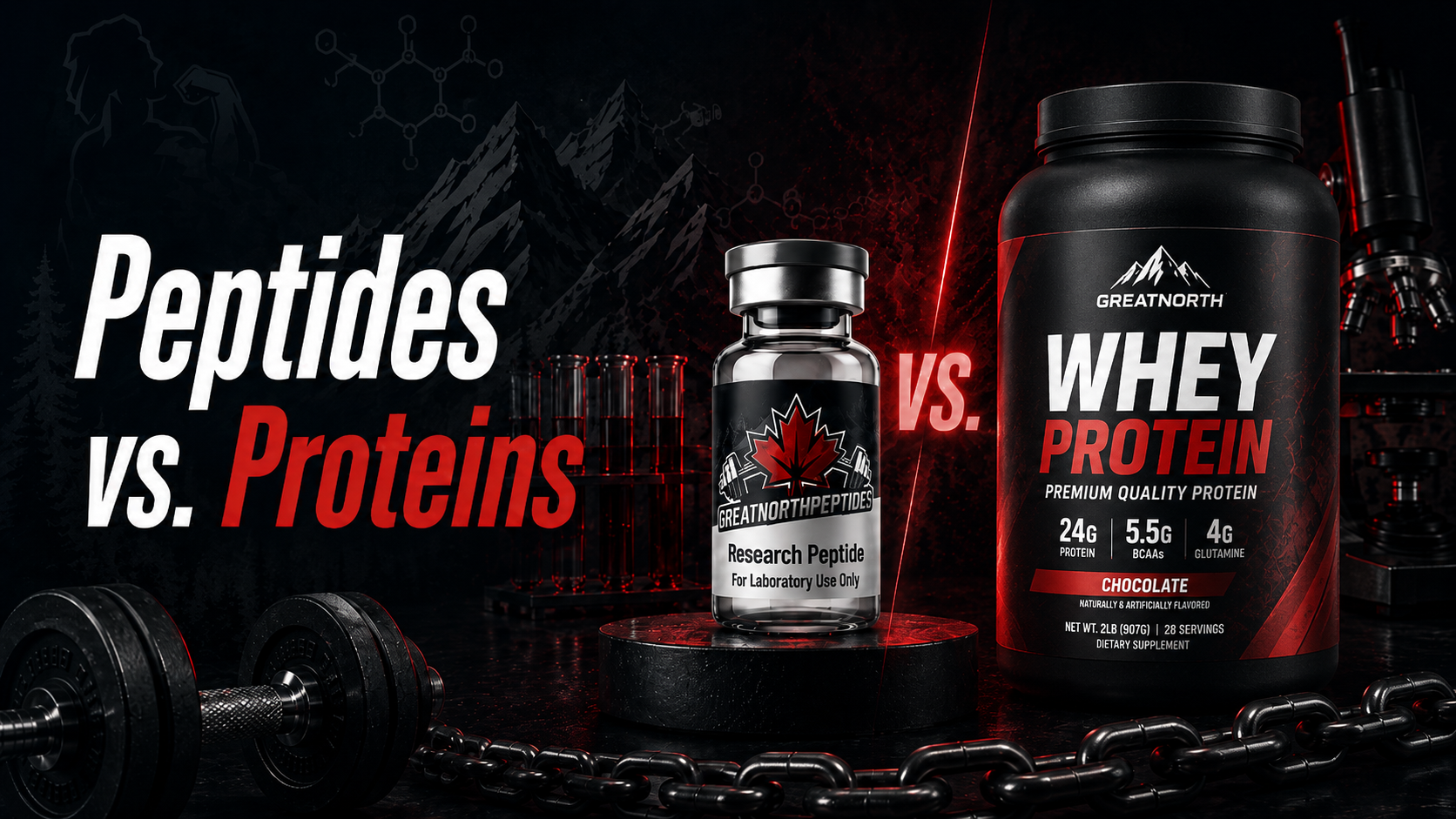
If you’ve recently started learning about peptide science, you’ve probably come across the terms research peptides and proteins. While they’re closely related, they’re not the same thing.
Because both are built from amino acids, it’s easy to assume they perform identical roles. In reality, they differ in size, structure, complexity, and how scientists study them.
Understanding these differences is important for anyone interested in molecular biology, laboratory research, or peptide science.
In this guide, we’ll explain how research peptides differ from proteins, how they’re classified, and why these differences matter in scientific research.
Key Takeaways
- Research peptides are shorter chains of amino acids.
- Proteins are larger and more structurally complex.
- Both play important roles in biological systems.
- Scientists study peptides and proteins for different research purposes.
- Understanding their differences helps interpret scientific literature more accurately.
What Are Research Peptides?
Research peptides are short chains of amino acids that scientists investigate to better understand biological processes under controlled laboratory conditions.
Because peptides contain fewer amino acids than proteins, they generally have simpler molecular structures.
Researchers study different peptides individually to observe how they interact with cells, receptors, enzymes, and biological signaling pathways.
If you’re new to peptide science, you may also find our guide “What Are Research Peptides? A Beginner’s Guide to Scientific Research” helpful for understanding the fundamentals.
What Are Proteins?
Proteins are larger molecules made from long chains of amino acids that fold into complex three dimensional structures.
Unlike peptides, proteins often perform highly specialized biological functions within living organisms.
Researchers study proteins to understand processes such as:
- Cell growth
- Enzyme activity
- Immune system function
- Cellular communication
- Structural support
Proteins are essential components of virtually every living cell.
Research Peptides vs. Proteins
Although peptides and proteins are both composed of amino acids, they differ in several important ways.
| Feature | Research Peptides | Proteins |
| Size | Short amino acid chains | Long amino acid chains |
| Structure | Relatively simple | Complex folded structures |
| Molecular Weight | Lower | Higher |
| Research Focus | Individual molecular interactions | Broader biological functions |
| Complexity | Lower | Higher |
These differences influence how scientists investigate each molecule during laboratory research.
Why Does Size Matter?
One of the primary distinctions between peptides and proteins is molecular size.
Peptides generally contain fewer amino acids, making them smaller and less structurally complex.
Proteins, on the other hand, consist of much longer amino acid chains that fold into highly organized structures.
This folding determines how proteins function inside biological systems.
Understanding Amino Acids
Both peptides and proteins begin with amino acids.
Scientists often describe amino acids as the building blocks of life because they combine in different sequences to create countless biological molecules.
Even small changes in amino acid order can alter a peptide’s structure or influence a protein’s overall shape.
Understanding amino acid sequences helps researchers investigate molecular biology at a deeper level.
How Scientists Study Peptides and Proteins
Although both molecules are studied in laboratories, researchers often investigate them differently.
Research involving peptides may focus on:
- Molecular interactions
- Cell signaling
- Receptor activity
- Laboratory analysis
Protein research may explore:
- Three dimensional structure
- Enzyme function
- Biological pathways
- Cellular mechanisms
Both areas contribute valuable knowledge to modern scientific research.
Why This Difference Matters
Knowing the difference between peptides and proteins helps researchers, students, and readers interpret scientific information more accurately.
Many educational resources discuss peptides and proteins together, but understanding how they differ makes scientific literature easier to understand.
Recognizing these distinctions also helps prevent misunderstandings when reading laboratory research or educational content.
Common Misconceptions
Are peptides simply small proteins?
Not exactly.
While peptides and proteins are both composed of amino acids, scientists generally classify them differently based on size, structure, and biological complexity.
Are all peptides studied for the same purpose?
No, each peptide has its own molecular characteristics, meaning researchers investigate them individually depending on the scientific question being explored.
Do peptides become proteins?
Some peptides may serve as building blocks during protein synthesis, but peptides and proteins are distinct molecular structures with different characteristics.
Frequently Asked Questions
What is the main difference between research peptides and proteins?
The primary difference is size. Research peptides are shorter chains of amino acids, while proteins are larger, more complex molecules with folded three, dimensional structures.
Are peptides made from amino acids?
Yes. Both peptides and proteins are composed of amino acids linked together in different sequences.
Why do scientists study peptides separately from proteins?
Because peptides and proteins differ in structure and biological complexity, researchers often investigate them using different laboratory approaches depending on the research objective.
Can peptides and proteins perform similar biological roles?
Some biological processes involve both peptides and proteins, but each has unique structural characteristics and functions that researchers study independently.
Final Thoughts
Research peptides and proteins share a common foundation, they’re both built from amino acids, but they differ significantly in size, complexity, and the way scientists investigate them.
Understanding these differences provides a stronger foundation for interpreting scientific literature and learning more about molecular biology and peptide science.
Whether you’re beginning your journey into research peptides or expanding your scientific knowledge, understanding these core concepts is an important step toward developing a deeper appreciation of biological research.